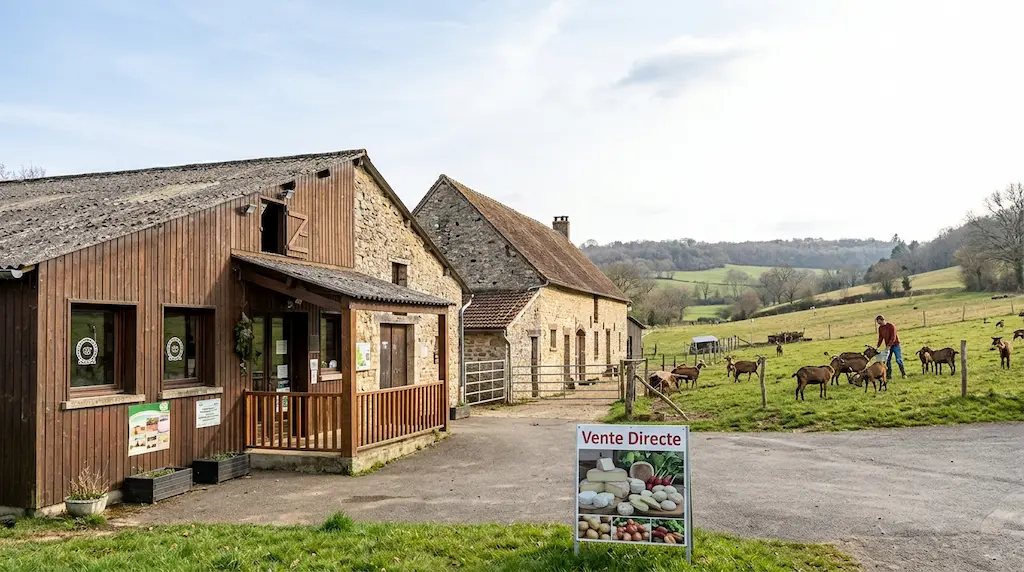
Between the grand châteaux and medieval villages of the Vallée de Chevreuse lies something equally important but far less celebrated: working farmland. The Ferme de Coubertin represents this agricultural reality—a genuine farm operation that connects visitors to the valley’s productive landscape, demonstrates sustainable farming practices, and reminds us that beautiful countryside exists not as scenery but as the source of our food.
This isn’t a sanitized farm experience designed for tourists. Coubertin is a real working farm that welcomes visitors who want to understand where their food comes from, how sustainable agriculture functions, and why maintaining farmland in rapidly urbanizing regions matters more than ever.
A Farm with Historical Roots
The Coubertin estate carries the name of one of France’s most celebrated figures: Baron Pierre de Coubertin, founder of the modern Olympic Games. The farm was part of his family’s property in the valley, and while the Baron is remembered for reviving the Olympics, his family’s connection to this agricultural land reflects a longer French tradition—aristocratic families maintaining productive estates that sustained local communities.
Today, the farm operates independently as an organic and sustainable agricultural enterprise, but that historical connection reminds us that this land has fed valley residents for centuries. The fields you see weren’t created yesterday for agritourism—they’re part of agricultural continuity stretching back generations.
This historical depth matters. When you buy vegetables from Coubertin, you’re participating in economic relationships that have organized valley life for hundreds of years: farmers growing food, communities purchasing it, land remaining productive rather than being paved over for development.
Organic Agriculture in Practice
Ferme de Coubertin practices organic farming (agriculture biologique) certified by French organic standards. This isn’t marketing language—it’s a rigorous commitment to soil health, biodiversity, natural pest management, and chemical-free production.
What Organic Actually Means Here
No synthetic pesticides or fertilizers: The farm builds soil fertility through composting, crop rotation, and cover cropping rather than chemical inputs. This takes more labor and knowledge but produces healthier soil and more nutritious crops.
Biodiversity as strategy: Rather than monoculture fields, Coubertin maintains crop diversity. This confuses pests (who prefer uniform fields), attracts beneficial insects, and creates resilient agricultural ecosystems that can weather climate variations.
Seasonal production: The farm grows what thrives naturally each season rather than forcing production through artificial means. This means spring brings asparagus and lettuces, summer yields tomatoes and zucchini, autumn provides squash and root vegetables, winter offers hardy greens and storage crops.
Water conservation: Irrigation practices minimize water use through drip systems, mulching, and choosing drought-tolerant varieties when possible. In an era of increasing water stress, these practices demonstrate agricultural adaptation to climate reality.
Soil as living system: Organic farming treats soil not as inert growing medium but as complex living ecosystem. Healthy soil teems with microorganisms, fungi, and invertebrates that create fertility naturally. Coubertin’s farming practices nurture this soil life rather than destroying it with chemicals.
For visitors, seeing these practices in action provides education impossible in conventional agriculture. You witness how food can be grown in harmony with natural systems rather than in opposition to them.
The Farm Stand: Where Valley Meets Table
The most direct way to experience Ferme de Coubertin is through its farm stand (vente directe), where produce is sold directly to customers without intermediaries.
The Farm-to-Table Connection
Radical freshness: Vegetables at the farm stand were often harvested that morning or the previous day. Compare this to supermarket produce that might be weeks old, shipped thousands of kilometers, and stored under refrigeration that degrades nutrients and flavor.
True seasonal eating: The farm stand only offers what’s currently growing. This forces customers into seasonal eating patterns—you can’t buy tomatoes in January, but you can buy carrots, cabbages, and leeks that thrive in winter. This limitation reconnects people to agricultural reality and seasonal rhythms.
Transparent pricing: You pay farmers directly, understanding exactly where your money goes. There’s no markup from distributors, retailers, or middlemen. This makes organic food more affordable than supermarket organic while ensuring farmers receive fair compensation.
Product knowledge: Staff can tell you exactly which field grew your lettuce, when it was harvested, how to store it, and how to prepare it. This knowledge transfer—farmer to eater—maintains culinary traditions and agricultural literacy increasingly lost in industrial food systems.
Variety beyond supermarkets: The farm grows heritage vegetables, unusual varieties, and seasonal specialties that never appear in commercial agriculture because they don’t ship well or have irregular shapes. These varieties often taste dramatically better—you discover what tomatoes or carrots actually taste like when breeding prioritizes flavor over shipping durability.