Where Fairy Tales Come to Life in a Royal Setting
Some châteaux tell the story of kings and wars. Others showcase architectural genius or political power. The Château de Breteuil does something more magical—it bridges the gap between historical grandeur and childhood wonder, creating an experience that captivates both eight-year-olds and eighty-year-olds. This is where French fairy tales literally come to life, where manicured gardens meet storytelling, and where history feels less like a lesson and more like an adventure.
A Château with Stories in Its Bones
Built in the early 17th century and continuously inhabited by the same family for over 400 years, Breteuil isn’t a museum—it’s a home that happens to be extraordinary. The de Breteuil family has included diplomats, ministers, and intellectuals who shaped French history. But what makes this château unique isn’t just who lived here; it’s what they did with it.
The family’s connection to Charles Perrault, the father of the modern fairy tale, forms the heart of Breteuil’s magic. Perrault, who gave the world Cinderella, Sleeping Beauty, Little Red Riding Hood, and Puss in Boots, was a close friend of the Breteuil family. The château has transformed this literary heritage into something unprecedented—bringing his tales to life throughout the estate using incredibly detailed wax figures and theatrical tableaux.
Fairy Tales You Can Walk Through
As you explore Breteuil, you’ll encounter over 50 wax figures recreating scenes from Perrault’s most beloved stories. These aren’t static displays—they’re fully staged theatrical moments frozen in time.
Sleeping Beauty slumbers in her tower, surrounded by her court caught mid-yawn as the spell takes hold. Puss in Boots strikes a deal with the ogre in a richly appointed room. Little Red Riding Hood meets the wolf in a forest scene so detailed you can almost smell the pine needles. Cinderella transforms from ash-covered servant to ball-ready princess in a magical sequence that delights children and adults alike.
What elevates these beyond tourist kitsch is the extraordinary attention to detail. The costumes are historically accurate, the settings use genuine period furniture, and the facial expressions capture genuine emotion. It’s like walking through an 18th-century picture book brought to three dimensions.
For international visitors, especially those with children, this creates something rare—a cultural experience that’s both educational and genuinely entertaining. Kids who might fidget through another palace tour become engaged explorers, searching for their favorite fairy tale characters.
The Château Itself: Elegant Intimacy
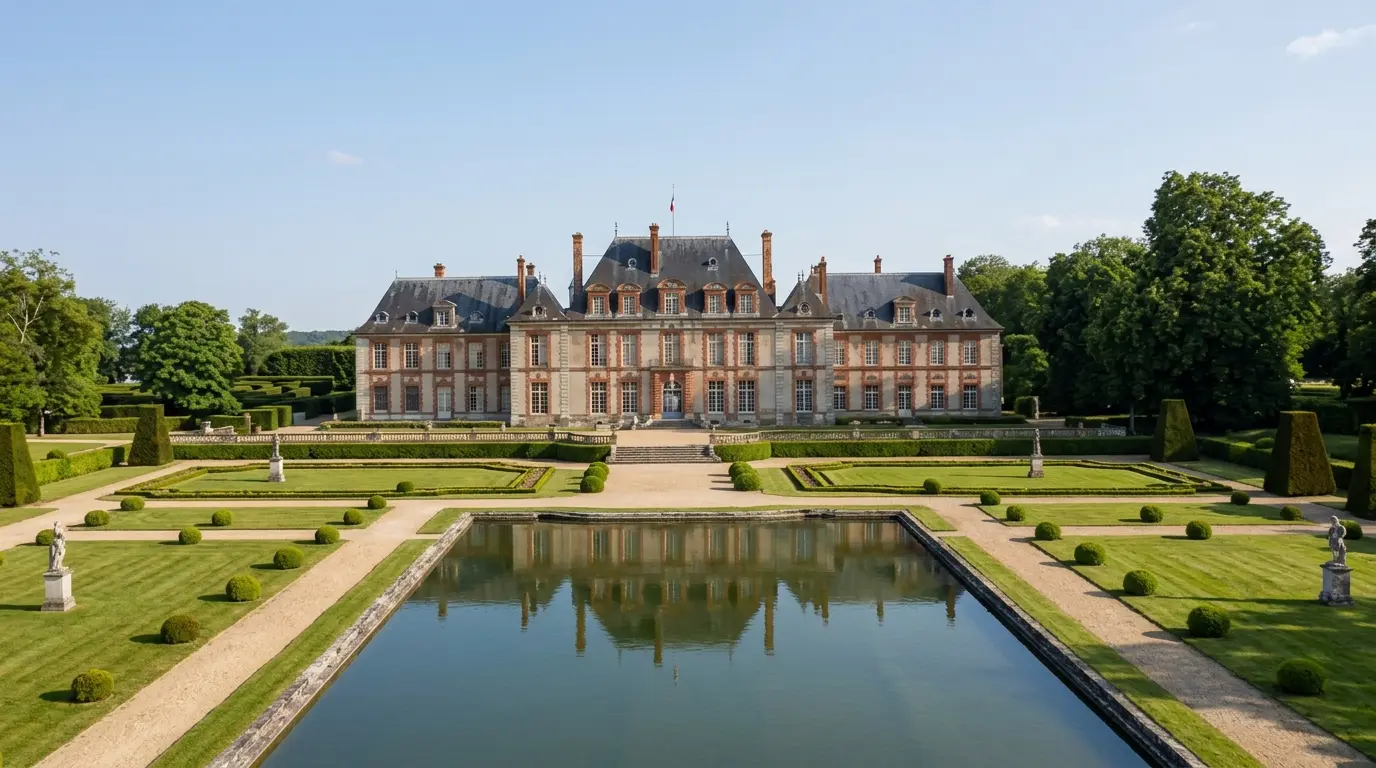
Beyond the fairy tales, Breteuil is a stunning example of Louis XIII architecture. The pink brick and white stone façade creates a warmth that the grey stone of many châteaux lacks. The scale is imposing without being intimidating—you can imagine actually living here, which is precisely the point since the family still does.
The Grand Apartments showcase how French aristocracy actually lived across four centuries. Unlike châteaux frozen in one historical moment, Breteuil shows evolution—Renaissance furniture sits alongside 18th-century additions and 19th-century modifications. Each room tells the story of successive generations adapting their heritage to contemporary needs while respecting what came before.
The Table Room displays the family’s impressive collection of tableware, including services used for diplomatic dinners. This might sound mundane, but the presentation reveals how dining was theater, politics, and art combined—a very French understanding of the table as cultural battleground.
The Prince’s Apartment preserves rooms exactly as they were in the 19th century, offering an intimate glimpse into aristocratic daily life. Personal items, letters, and photographs humanize the inhabitants, making history feel immediate and personal.
Gardens Designed for Discovery
The 75-hectare park surrounding Breteuil combines French formal tradition with romantic English landscape design, creating distinct experiences as you move through different garden rooms.
The French Garden immediately behind the château presents classical geometry at its finest—parterres, topiaries, and flower beds arranged in perfect symmetry. The Princes’ Garden, designed specifically for the family’s children over two centuries ago, shows that even aristocratic kids needed playspaces. Today’s young visitors appreciate this historical continuity.
The Mosaic Garden features intricate box hedge patterns that create living artwork when viewed from the château’s upper windows. In spring, tulips add color explosions to the geometric precision.
But the real magic happens in The English Garden, where romantic landscapes unfold around every bend. Winding paths lead through groves of ancient trees, past hidden ponds with swans, and to surprising viewpoints. The Labyrinth provides genuine navigation challenge—getting pleasantly lost in hedge mazes is a joy that never gets old.
The Mirror Pool creates that quintessentially French effect of doubling beauty through reflection. The château mirrored in still water has launched a thousand photographs, yet somehow never feels clichéd.
Throughout the park, contemporary sculptures add unexpected modern touches—demonstrating that Breteuil isn’t locked in the past but continues evolving artistically.
Why International Visitors Love Breteuil
The fairy tale connection transcends language barriers. Whether you grew up with Perrault, Disney adaptations, or local versions of these universal stories, you’ll recognize the characters. This makes Breteuil particularly welcoming for non-French speakers—the visual storytelling requires no translation.
It’s genuinely family-friendly without dumbing anything down. Children engage with the fairy tales while adults appreciate the historical interiors, gardens, and architecture. Few cultural sites achieve this balance.
The scale is manageable. You can see everything in 2-3 hours without exhaustion, or spend a full day if you want to picnic in the gardens and really absorb the atmosphere.
It feels authentic. Despite the tourist-friendly fairy tale elements, Breteuil remains a real family home, not a theme park. This authenticity creates a very different experience from commercialized attractions.
The gardens invite participation. Unlike “look but don’t touch” formal gardens, Breteuil encourages wandering, hiding in the labyrinth, and exploring freely.
Seasonal Celebrations and Special Events
Breteuil isn’t static. Throughout the year, special events bring new life to the château:
Easter sees extensive egg hunts through the gardens—a French tradition that’s pure joy for children.
Summer brings outdoor theatrical performances and garden festivals.
Christmas transforms the château into a winter wonderland, with decorations that would make Perrault’s fairy godmothers proud.
These events mean that even locals who’ve visited before find reasons to return. For travelers, timing your visit around special programming can enhance an already rich experience.
Practical Magic
- Open year-round: Different seasons, different experiences—all beautiful
- Audio guides available in multiple languages: Essential for non-French speakers who want the full historical context
- Allow 2-3 hours minimum: One hour for château interiors, the rest for gardens and fairy tale discovery
- Excellent for photography: Both the château and gardens offer endless photo opportunities
- Picnic-friendly: Designated areas in the park welcome you to bring lunch
- Accessible for strollers and wheelchairs: The main routes through château and gardens accommodate mobility needs
- Small café on-site: For drinks and light refreshments
The Breteuil Effect
What happens at Breteuil is subtle but powerful. Adults arrive expecting a “kid-focused” attraction and discover a legitimate château with serious historical and architectural merit. Children arrive expecting boring history and discover their favorite fairy tales made real. Everyone leaves having experienced something that shouldn’t work—highbrow heritage and accessible storytelling somehow coexisting perfectly.
This is Breteuil’s genius: refusing to choose between historical preservation and engaging presentation, between aristocratic grandeur and democratic accessibility, between education and entertainment.
The château proves that heritage doesn’t have to be stuffy to be respected, that fairy tales can enhance rather than diminish historical appreciation, and that sometimes the best way to preserve culture is to let it live, breathe, and enchant new generations.
Beyond the Castle Gates
Breteuil’s location in the Chevreuse Valley means your visit can easily combine with other discoveries—medieval Chevreuse town is minutes away, forest hiking trails surround the area, and you’re in the heart of a region that defined French countryside elegance.
The château works perfectly as part of a larger Vallée de Chevreuse experience: cultural sophistication in natural settings, history that feels alive, and experiences scaled for humans rather than crowds.
The Universal Language of Stories
In the end, Breteuil succeeds because it taps into something universal. The fairy tales Perrault collected and refined have traveled the world, crossing every border and language. Encountering them in a 17th-century French château—where nobility once entertained the very man who gave them literary immortality—creates a circular completeness.
You’re not just visiting where history happened. You’re stepping into the stories that shaped childhood imaginations worldwide, discovering their French roots, and experiencing them in a setting that would make even the most demanding fairy godmother approve.
Magic, it turns out, doesn’t require wands or spells. Sometimes it just takes a beautiful château, enchanting gardens, and the timeless tales we never quite outgrow.