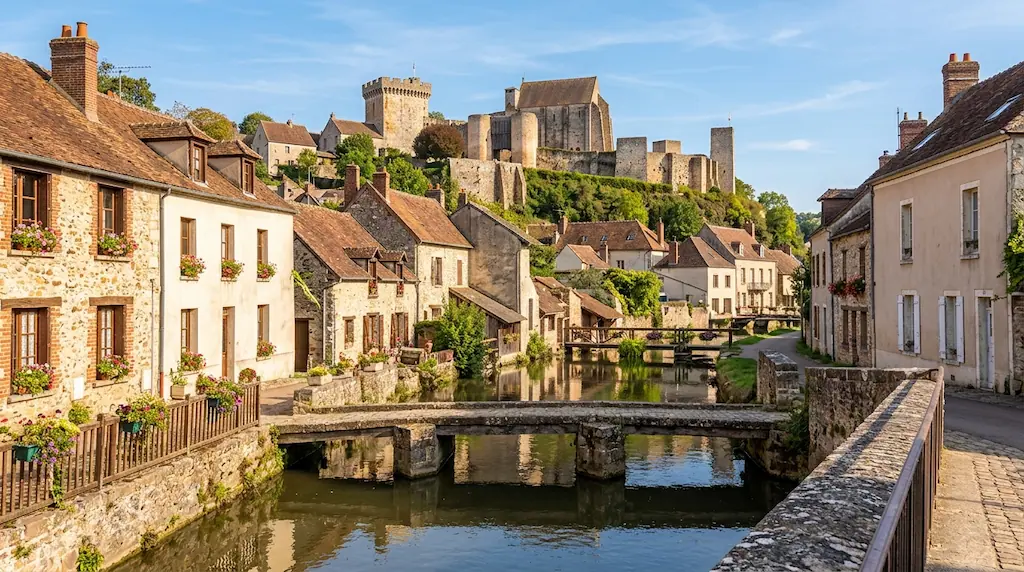
While grand châteaux draw visitors to the Île-de-France, it’s the small towns that reveal France’s authentic character. Chevreuse—the namesake village of the entire valley—embodies everything travelers dream about when they imagine provincial French life: medieval streets where history whispers from every stone, riverside cafés perfect for people-watching, markets bursting with regional products, and a rhythm of life that refuses to rush.
This isn’t a preserved museum town or a tourist-engineered fantasy. Chevreuse is simply, beautifully real.
A Town Shaped by Geography and Time
Chevreuse exists because of its position. The Yvette River carved this valley through limestone and forest, creating fertile ground and natural transportation. Medieval lords recognized the strategic value—hence the fortress crowning the heights above. Merchants and craftspeople settled below, creating a town that has served the valley for over a thousand years.
That continuity shapes everything. The street layout you walk today follows medieval patterns. The bridges crossing the Yvette occupy the same crossing points used by farmers bringing goods to market centuries ago. The church square has been a community gathering point since the 12th century.
But Chevreuse avoided the museumification that kills some historic towns. People actually live here—raising families, running businesses, arguing about local politics, celebrating festivals. The town functions as a real community that happens to be extraordinarily beautiful, rather than a beautiful shell emptied of authentic life.
The Old Town: Where Every Corner Tells Stories
Wandering Chevreuse’s historic center rewards curiosity over itineraries. Put away your map and let the streets lead you.
Rue de la Division Leclerc, the main commercial street, provides your introduction. Half-timbered buildings from the 15th and 16th centuries house contemporary shops and cafés. Look up—above modern storefronts, you’ll see exposed beams, carved details, and architectural elements spanning five centuries. French towns layer history vertically; the ground floor might be 21st century, but the upper stories whisper of Renaissance merchants.
Side streets narrow into intimate passageways where cars cannot venture. These pedestrian corridors, originally designed for foot traffic and handcarts, create a human-scaled environment increasingly rare in our car-dominated world. The Passage des Écoles and surrounding lanes feel medieval because they are—though electricity and plumbing have been tactfully added.
Hidden courtyards reveal themselves to explorers. An unmarked doorway opens onto a quiet square with a fountain. A passageway between buildings leads to gardens where locals grow vegetables. These semi-private spaces blur the line between public and private, community and individual—a very French approach to urban space.
The Church of Saint-Saturnin, with origins in the 12th century, dominates the old town spiritually and architecturally. Its Romanesque bell tower has marked time for eight centuries. Step inside during quiet hours (avoiding service times unless you wish to attend) and you’ll find that particular quality of light that old churches create—colored by ancient glass, softened by stone, somehow both solemn and welcoming.
The Yvette River: Chevreuse’s Liquid Heart
More than any building, the Yvette River defines Chevreuse’s character. This modest waterway, never more than a few meters wide, creates the town’s soundtrack, shapes its geography, and provides its most beautiful spaces.
Multiple bridges cross the river at different points, each with its own character. The Pont de Pierre (Stone Bridge), dating to medieval times, carries vehicle traffic with stolid dependability. Smaller footbridges connect neighborhoods and create shortcuts. Each crossing offers different perspectives on the town—red roofs reflected in calm water, willow branches trailing in the current, ducks paddling upstream with determined dignity.
The riverside walkways invite strolling without destination. Tree-lined paths follow both banks in places, creating natural promenades where locals walk dogs, couples stroll hand-in-hand, and elderly residents take their daily constitutional. These aren’t manicured parklands but semi-wild spaces where nature and civilization coexist comfortably.
Old mill buildings along the river recall when waterpower drove local economy. Most have been converted to residences, but their massive wheels and stone construction remain, connecting present to industrial past. These buildings show how towns adapted existing structures rather than demolishing history.
In summer, the river provides natural cooling—air temperatures near the water drop noticeably, making riverside cafés particularly pleasant. In autumn, fallen leaves carpet the walkways in gold and russet. Winter brings occasional flooding that residents accept philosophically; living with a river means accepting its moods.
Market Days: The Heartbeat of Community
If you visit Chevreuse on market day (typically Sunday morning—verify current schedule), you’ll witness the town at its most vibrantly authentic. The weekly market transforms the main square into a celebration of regional agriculture, artisanal food production, and social connection.
Farmers from the valley arrive before dawn to set up stalls. By 9 AM, the market buzzes with activity. Vegetables still bearing garden soil are displayed with rustic pride—these tomatoes grew in valley fields, these lettuces were picked this morning, these potatoes come from family farms that have worked the same land for generations.
Cheese vendors offer samples of local productions—goat cheeses from nearby farms, aged cow’s milk cheeses, experimental creations that blend tradition with innovation. The vendors know their products intimately and love discussing terroir, aging techniques, and perfect pairing suggestions.
The baker sells country breads that make supermarket baguettes taste like cardboard—dense loaves with real crusts, specialty breads studded with nuts or dried fruit, traditional regional varieties you won’t find elsewhere. Buy one warm from the oven and you’ll understand why the French never stopped caring about bread.
Rotisserie chicken vendors perfume the market with the smell of birds slowly turning over open flames, basted with herbs and their own drippings. This is Sunday lunch for many locals—pick up a chicken, some roasted potatoes, and fresh salad from the vegetable stall, and dinner is sorted.
But the market isn’t just commerce—it’s social infrastructure. Neighbors catch up on local news. Vendors and regular customers exchange updates on family, weather, and valley gossip. The market square becomes the town’s living room, where community renews itself weekly through the ritual of buying and selling local food.
For visitors, the market offers cultural immersion money can’t buy. You’re not watching authentic French life from outside—you’re participating in it. Buy some cheese, practice your French, smile when you mangle the language, and discover that market vendors appreciate the effort more than perfect grammar.
Cafés and Restaurants: Where Chevreuse Gathers
French cafés aren’t just places to drink coffee—they’re social institutions, public living rooms, and observation posts for watching local life unfold.
Chevreuse’s café terraces line the main streets and square. On sunny days, nearly every table fills with locals reading newspapers, friends arguing cheerfully about politics, couples splitting pastries, or solitary philosophers nursing espresso while watching the world pass.
The café culture operates on different principles than Anglo-American coffee shops. Order your drink and you’ve rented that table indefinitely—no pressure to leave, no judgment for sitting for hours. It’s understood that cafés exist for lingering, thinking, conversing, or simply existing in public solitude.
Brasseries and restaurants offer cuisine ranging from traditional French comfort food to more refined regional specialties. Look for plats du jour (daily specials) that showcase seasonal ingredients and chef creativity. These daily offerings usually represent better value and fresher ingredients than the regular menu.
Le déjeuner (lunch) remains sacred in French provincial towns. Between noon and 2 PM, restaurants fill with locals—workers from nearby businesses, retired residents, and families. Sitting among them rather than in tourist-heavy establishments provides a different experience entirely. The pace is leisurely, multiple courses are standard, and wine at lunch raises no eyebrows.
Small Shops: Traditions That Survive
Unlike towns where chain stores have obliterated local commerce, Chevreuse maintains specialist independent shops that define French retail culture.
The boulangerie (bakery) opens early, closes for lunch, reopens afternoon. Fresh bread appears throughout the day—the morning batch for breakfast, a second baking for lunch, another for dinner. Locals time shopping to bread cycles, ensuring maximum freshness. The baker knows regular customers’ preferences and might set aside your favorite loaf if you mention you’ll come by later.
The butcher displays meat cuts that might perplex Anglo visitors but make perfect sense in French cooking traditions. Explain what you’re cooking and the butcher will recommend appropriate cuts and preparation techniques. This isn’t just retail—it’s culinary education.
The wine merchant curates selections emphasizing regional producers and lesser-known appellations alongside famous names. These shops educate rather than just sell, introducing customers to new discoveries while maintaining reliable favorites.
The pharmacy maintains that particularly French combination of medical seriousness and beauty product expertise. French pharmacies sell high-quality skincare alongside medications, reflecting cultural beliefs about health encompassing appearance.
These shops survive because locals consciously support them, understanding that convenience of chain stores comes at the cost of community character. For visitors, these establishments offer authentic interaction impossible in impersonal supermarkets.
Living History: Architecture You Can Touch
Chevreuse’s medieval and Renaissance architecture isn’t roped off behind velvet barriers—you walk past it, shop in it, eat in it, and live among it.
Half-timbered houses from the 15th century lean slightly, their wooden frames weathered by five hundred winters. These aren’t reconstructions or museums—people live in them, adapting medieval structures to contemporary needs while respecting their character.
Stone townhouses from the 17th and 18th centuries display classical French proportions—tall windows, mansard roofs, carved doorways. Many retain original details: iron balconies, decorative shutters, stone pediments over doorways carved with family crests or artisan symbols.
Observant wanderers notice layers of modification—a Renaissance doorway in a medieval wall, a 19th-century shopfront inserted into a 16th-century building, modern windows carefully designed to match historical proportions. These layers tell stories of adaptation, showing how communities preserve heritage while embracing necessary change.
The Valley Frame: Nature Meeting Culture
What makes Chevreuse special isn’t just the town itself but its setting within the valley. Forested hills rise on both sides, creating a protective embrace. The town sits at the valley bottom where the Yvette carves through, positioned perfectly between wild nature and cultivated civilization.
Walk ten minutes from the town center and you’re in forest trails. The Vallée de Chevreuse Natural Regional Park surrounds the town, offering hiking, cycling, and nature immersion. This proximity to wilderness shapes town character—residents maintain connection to natural rhythms increasingly lost in urban areas.
The valley’s agricultural landscape—fields, small farms, pastures—remains visible from town edges. You can see where your market vegetables grew, watch cows grazing in meadows, observe seasonal changes in cultivation. This visible connection between land and table grounds food culture in reality rather than abstraction.
Why Chevreuse Resonates with International Visitors
For travelers from countries where historic preservation often means freezing towns in artificial amber, Chevreuse demonstrates a different approach: heritage living and breathing rather than embalmed. The town hasn’t chosen between authentic character and contemporary function—it maintains both.
The pace of life immediately registers as different. People aren’t rushing. Shops close for lunch because eating properly matters more than maximizing revenue. Conversations happen in doorways, on street corners, across market stalls—social connection valued over efficiency.
The aesthetic quality pervades daily life rather than being reserved for special occasions or tourist sites. Beautiful buildings house ordinary shops. Lovely squares serve as everyday gathering spots. This integration of beauty into normal life reveals cultural values—the French belief that daily existence deserves aesthetic consideration.
The human scale creates comfort. Chevreuse is walkable end-to-end in fifteen minutes. You can orient yourself quickly, recognize landmarks, start feeling like a temporary resident rather than a tourist. This accessibility without overwhelming scale makes it welcoming rather than intimidating.
Seasonal Rhythms
Spring brings the valley to life spectacularly. Trees leaf out, flowers bloom, and market stalls overflow with asparagus, strawberries, and early vegetables. Café terraces fill with locals emerging from winter, celebrating warmth and light.
Summer means long, luminous evenings. The town stays lively until late, with families dining on terraces and children playing in squares until 10 PM. The river becomes particularly inviting, its shade and flowing water providing natural air conditioning.
Autumn paints the surrounding forests in spectacular colors visible from town. The harvest season brings mushrooms, game, and heartier vegetables to market. The slanting light creates golden hours that extend through afternoon.
Winter strips away tourist veneer, revealing the town’s authentic core. Locals reclaim cafés and restaurants. Holiday decorations appear—tasteful and understated rather than commercial. The town becomes intimate, cozy, genuine.
Practical Living: What Visitors Need to Know
- Market day is Sunday morning: Arrive by 9:30 AM for best selection
- Lunch runs 12-2 PM: Restaurants fill with locals; book ahead or arrive early
- Many shops close Monday: Plan shopping accordingly
- The town is highly walkable: Comfortable shoes are essential
- Limited parking in old town: Use designated lots and walk in
- Cafés are for lingering: Order coffee and stay as long as you like
- English is limited: Basic French phrases go far; effort is appreciated
Beyond Tourist Performance
What Chevreuse offers ultimately isn’t a curated experience or designed attraction. It’s simply a French town being itself—maintaining traditions not for visitors but because residents value them, creating beauty not for Instagram but because aesthetics matter to daily life, moving at its own pace because rushing degrades quality.
For travelers tired of tourist performances, this authenticity provides rare nourishment. You’re not watching “authentic French village life”—you’re experiencing it alongside people living it.
The greatest luxury Chevreuse offers might be this: permission to slow down, to value quality over quantity, to appreciate that some things—good bread, pleasant conversation, beautiful spaces, community connection—matter more than efficiency or productivity.
It’s a lesson the town has maintained for a thousand years. Those who visit and truly listen often carry it home.