Where French Romanticism Found Its Voice
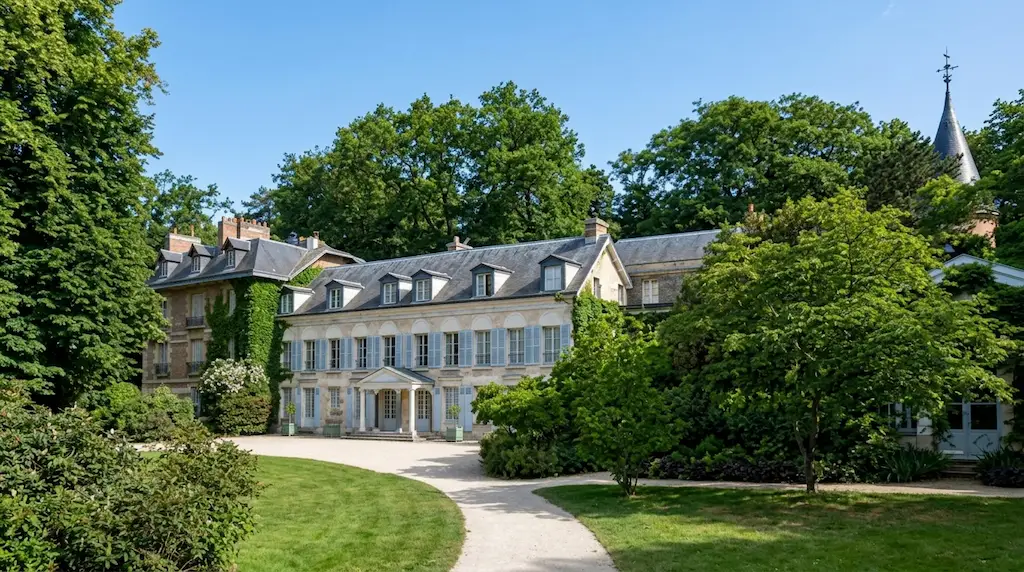
In a wooded valley just south of Paris, tucked between ancient forests and romantic parkland, stands a white manor house that changed French literature forever. The Maison de Chateaubriand isn’t a royal palace or military fortress—it’s something more intimate and perhaps more powerful: the home where one of France’s greatest writers crafted the words that defined an entire cultural movement.
François-René de Chateaubriand, the father of French Romanticism, chose this retreat in Châtenay-Malabry not for its grandeur but for its solitude, its natural beauty, and its capacity to inspire. Today, visiting his home means entering the physical space where literary genius merged with landscape to create works that still resonate two centuries later.
The Writer Who Shaped an Era
Before you can appreciate the house, you need to understand the man. François-René de Chateaubriand (1768-1848) lived through France’s most tumultuous period—revolution, empire, restoration, and republic again. He survived the Terror, traveled to America, fought in émigré armies, served as ambassador and minister, and through it all, never stopped writing.
His work redefined how French—and European—culture understood nature, emotion, memory, and the self. Atala, René, and the monumental Mémoires d’outre-tombe (Memoirs from Beyond the Grave) introduced a new literary voice: introspective, melancholic, passionate, and deeply attuned to landscape as emotional mirror.
Chateaubriand didn’t just describe nature—he showed how wild places reflect and shape human consciousness. His prose made forests cathedrals, storms emotional symphonies, and solitary landscapes spaces for profound self-discovery. Every Romantic writer who followed—Hugo, Lamartine, even Baudelaire—walked paths Chateaubriand first cleared.
Understanding this context transforms visiting his house from tourist activity into literary pilgrimage.
La Vallée-aux-Loups: A Romantic’s Paradise
In 1807, having fallen from Napoleon’s favor (he’d criticized the Emperor’s authoritarianism), Chateaubriand retreated from Paris to this property he named La Vallée-aux-Loups (Valley of the Wolves). The name itself captures Romantic sensibility—slightly wild, evocative, connecting human settlement to untamed nature.
The house Chateaubriand purchased was modest—a simple country dwelling that he gradually transformed into a literary sanctuary. What you see today reflects his aesthetic vision: elegant without ostentation, comfortable rather than palatial, designed to facilitate thought and writing rather than impress visitors.
The study where Chateaubriand wrote remains the house’s emotional center. His desk sits positioned to face the garden, allowing him to look up from his manuscript toward the trees and parkland he’d designed. This wasn’t accident—Chateaubriand needed visual connection to nature while writing. The landscape outside wasn’t backdrop; it was collaborator.
Throughout the house, personal objects connect visitors to the man: his books (many annotated in his own hand), portraits painted during various life stages, letters revealing his complex relationships, furniture he selected. These artifacts humanize the literary legend, showing someone who lived fully and messily, who loved and suffered, who doubted and persevered.
The library showcases Chateaubriand’s intellectual breadth—classical texts, travel narratives, political philosophy, contemporary literature. These shelves reveal the sources feeding his imagination, the conversations his mind conducted across centuries and cultures.
The Park: Landscape as Literature
What distinguishes La Vallée-aux-Loups from other writer’s homes is Chateaubriand’s active shaping of the landscape. He wasn’t content with the property as he found it—he designed extensive gardens that embodied Romantic principles.
The romantic park Chateaubriand created follows English landscape garden tradition rather than French geometric formality. Winding paths encourage meandering rather than direct transit. Carefully composed vistas reveal themselves around curves. Trees are allowed to grow naturally rather than being severely pruned. The overall effect creates naturalistic beauty that appears spontaneous but results from careful artistic intention.
Chateaubriand collected exotic trees from around the world—cedars from Lebanon, magnolias from America, rare species that reminded him of his travels. Each tree carried memory and meaning. Walking among them, you’re navigating an autobiography written in living wood rather than ink.
Hidden corners throughout the park offer contemplative spaces—a bench beneath ancient trees, a viewpoint over the valley, a grove that creates natural solitude. These aren’t accidents. Chateaubriand designed them as outdoor rooms for thought, meditation, and emotional processing. The Romantics believed nature facilitated self-knowledge; these spaces materialize that philosophy.
The Tower Chateaubriand added to the property served as both architectural focal point and symbolic statement. Towers in Romantic literature represent isolation, perspective, the writer elevated above mundane concerns to achieve visionary insight. His tower functioned practically (housing his growing library) and metaphorically (proclaiming his identity as author-visionary).
The Forest Connection
Beyond the cultivated park lies Aulnay Forest—wild woodland that borders the property and extends for kilometers. This forest profoundly influenced Chateaubriand’s writing and worldview.
French Romantic literature is obsessed with forests—dark, mysterious, simultaneously threatening and restorative. Chateaubriand’s daily walks through Aulnay Forest fed that literary tradition. He observed seasonal changes, noted how light transformed woodland atmosphere, documented emotional responses to natural phenomena.
For visitors today, forest walks accessible from the property allow experiencing landscape through Romantic eyes. These aren’t manicured paths—they’re genuine forest trails where you encounter the same wildness Chateaubriand knew. Birds call in the canopy. Light filters through leaves. The modern world recedes.
This immediate transition from house to cultivated park to wild forest creates a unique experience. In an hour, you move through carefully graduated stages of civilization to wildness, understanding viscerally how Romantics conceptualized the relationship between human culture and untamed nature.
Why Literary Tourists Make Pilgrimages Here
For readers of French Romanticism, visiting Chateaubriand’s home provides irreplaceable context. His nature descriptions, his melancholic introspection, his complex relationship to solitude—all make deeper sense when you’ve walked his gardens, sat in his study, experienced the landscape that shaped his consciousness.
For students of landscape history, the park demonstrates how Romantic principles translated from literature into garden design. This isn’t a garden you simply look at—it’s one you inhabit emotionally, allowing landscape to shape mood and thought.
For anyone who loves writers’ homes, La Vallée-aux-Loups offers unusual intimacy. Unlike houses preserved as shrines, this feels lived-in, human-scaled, accessible. Chateaubriand’s presence remains palpable not through worshipful distance but through the immediate connection between space and creative work.
For international visitors, particularly from cultures where Romantic literature profoundly influenced national identity, this pilgrimage connects to larger cultural currents. American transcendentalists, English Lake Poets, German Sturm und Drang—all drew from the well Chateaubriand helped dig.
The Exhibitions and Cultural Programming
La Vallée-aux-Loups isn’t static. The site hosts temporary exhibitions exploring Romantic art, literature, and culture. These shows contextualize Chateaubriand within broader movements, showing connections to contemporary artists, musicians, and thinkers.
Literary events—readings, lectures, discussions—maintain the house’s identity as living cultural space rather than museum. Hearing contemporary writers read in Chateaubriand’s study creates direct lineage, demonstrating how literary tradition continues evolving.
Educational programs serve school groups and university students, but even casual visitors benefit from excellent interpretive materials. Audio guides provide deep background without overwhelming. Well-designed signage explains without intruding.
Seasonal Poetry
Each season writes its own chapter at La Vallée-aux-Loups:
Spring brings explosive growth—the exotic trees leaf out, early flowers carpet the ground, and the forest thrums with new life. This was Chateaubriand’s season of hope, when nature’s renewal inspired literary productivity.
Summer creates dense green canopy and intimate shade. The park becomes refuge from heat, its trees providing natural cooling. This season invites slow wandering and contemplative reading on shaded benches.
Autumn transforms the landscape into Romantic painting—golden leaves, melancholic beauty, the sweet sadness Chateaubriand captured so perfectly in prose. This season perhaps best captures the writer’s sensibility: beauty tinged with transience, pleasure shadowed by awareness of time’s passage.
Winter strips away decoration to reveal structure—both architectural and natural. The house’s bones emerge clearly. Bare trees create different vistas. The atmosphere becomes introspective, matching Chateaubriand’s darker moods. This is when the study feels most authentic as writing space—a warm interior shelter against cold exterior wildness.
Practical Details for Pilgrims
- Open Wednesday through Sunday: Closed Mondays and Tuesdays
- Allow 2-3 hours: One hour for house, the rest for park and forest
- Audio guides essential: Available in multiple languages, providing crucial literary context
- Free park access: Even when house is closed, grounds welcome visitors
- Perfect for combining: Close to Sceaux Park, creating full-day cultural excursion
- Limited English signage: Audio guide recommended for non-French speakers
- Excellent bookshop: Rare editions of Chateaubriand’s works, Romantic literature, garden history
- Photography encouraged: Unlike many house museums, they welcome capturing the space
The Memoirs Connection
Chateaubriand’s masterpiece, Mémoires d’outre-tombe, was partially written here. These memoirs—composed over four decades—represent one of French literature’s monuments: personal history intertwined with national upheaval, philosophical reflection merged with passionate storytelling.
Reading selections before or after visiting deepens the experience. Chateaubriand describes these very rooms, this garden, these trees. Walking where he walked while his words echo in your mind creates extraordinary literary immersion.
The memoirs’ title—”from beyond the grave”—reflects Chateaubriand’s instruction that they not be published until after his death. Standing in his study, you realize he wrote for us, for future readers he’d never meet, creating an odd intimacy across time. His words were letters to the future; visiting his home is our reply.
Beyond Biography: What Chateaubriand Still Teaches
The genius of preserving writer’s homes lies not in biographical voyeurism but in understanding how creative work happens—how place and consciousness interact, how natural beauty feeds imagination, how solitude and society balance in artistic lives.
Chateaubriand’s house teaches that serious creative work requires both: engagement with the world (his political career, his travels, his passionate relationships) and retreat from it (this valley, this study, this controlled solitude). The Romantic ideal wasn’t pure isolation—it was alternation between intensity and reflection.
The designed landscape teaches that artifice and nature needn’t oppose. Chateaubriand shaped his grounds carefully, yet the effect feels natural. Good design respects material; creative intervention enhances rather than violates inherent character.
The forest connection teaches that wildness matters even—especially—for civilized people. Regular contact with untamed nature isn’t luxury or leisure; it’s necessary for psychological health, creative vitality, and spiritual grounding. Chateaubriand knew this instinctively two centuries ago. We’re only now rediscovering it scientifically.
The Continuing Legacy
French Romanticism didn’t end with Chateaubriand—it evolved through Hugo, Nerval, Sand, and beyond. But he established the foundation: nature as emotional mirror, landscape as spiritual teacher, memory as creative force, melancholy as legitimate and even beautiful emotion.
Every time you read a novel where landscape reflects character psychology, you’re experiencing Chateaubriand’s legacy. Every time natural beauty moves you emotionally, you’re feeling what Romantics articulated. Every time you seek nature to process difficult emotions, you’re following paths they mapped.
Visiting his home isn’t ancestor worship—it’s recognizing ourselves in literary tradition, understanding that our deepest responses to beauty, nature, and creative expression connect us across centuries to people who felt and thought and struggled as we do.
The Full Experience
Don’t rush La Vallée-aux-Loups. This isn’t a destination for rapid touring. Bring a book—ideally Chateaubriand, but any Romantic writer works. Find a bench in the garden. Read for an hour. Let the landscape work on your consciousness as it worked on his.
Walk the forest trails. Notice how light changes woodland atmosphere. Observe your emotional responses to natural phenomena. You’re not just sightseeing—you’re practicing Romantic observation, the attentiveness to nature’s details that fed an entire literary movement.
Sit in the study (when access permits) and imagine the labor of writing—not romantic inspiration striking like lightning, but the daily discipline of sitting down, facing blank pages, finding words to capture elusive experience.
This experiential approach—reading, walking, observing, feeling—honors Chateaubriand’s legacy more authentically than rapid photographing and checklist tourism.