Where Architectural Perfection Meets Timeless Tranquility
In the heart of the Vallée de Chevreuse, where rolling hills meet ancient forests, stands a château that embodies French classical architecture at its most harmonious. The Château de Dampierre-en-Yvelines doesn’t shout for attention like Versailles or hide in presidential reserve like Rambouillet. Instead, it simply exists in quiet perfection—a 17th-century masterpiece that filmmakers, architects, and discerning travelers seek out precisely because it hasn’t been overrun by mass tourism.
The Architecture of Pure Harmony
Approach Dampierre and you’ll understand why Jules Hardouin-Mansart, architect to Louis XIV, is considered one of history’s greatest masters. The château, built between 1675 and 1683 for the Duke de Chevreuse, represents French classical architecture in its purest form. No baroque excess, no rococo flourishes—just impeccable proportion, symmetry, and restraint.
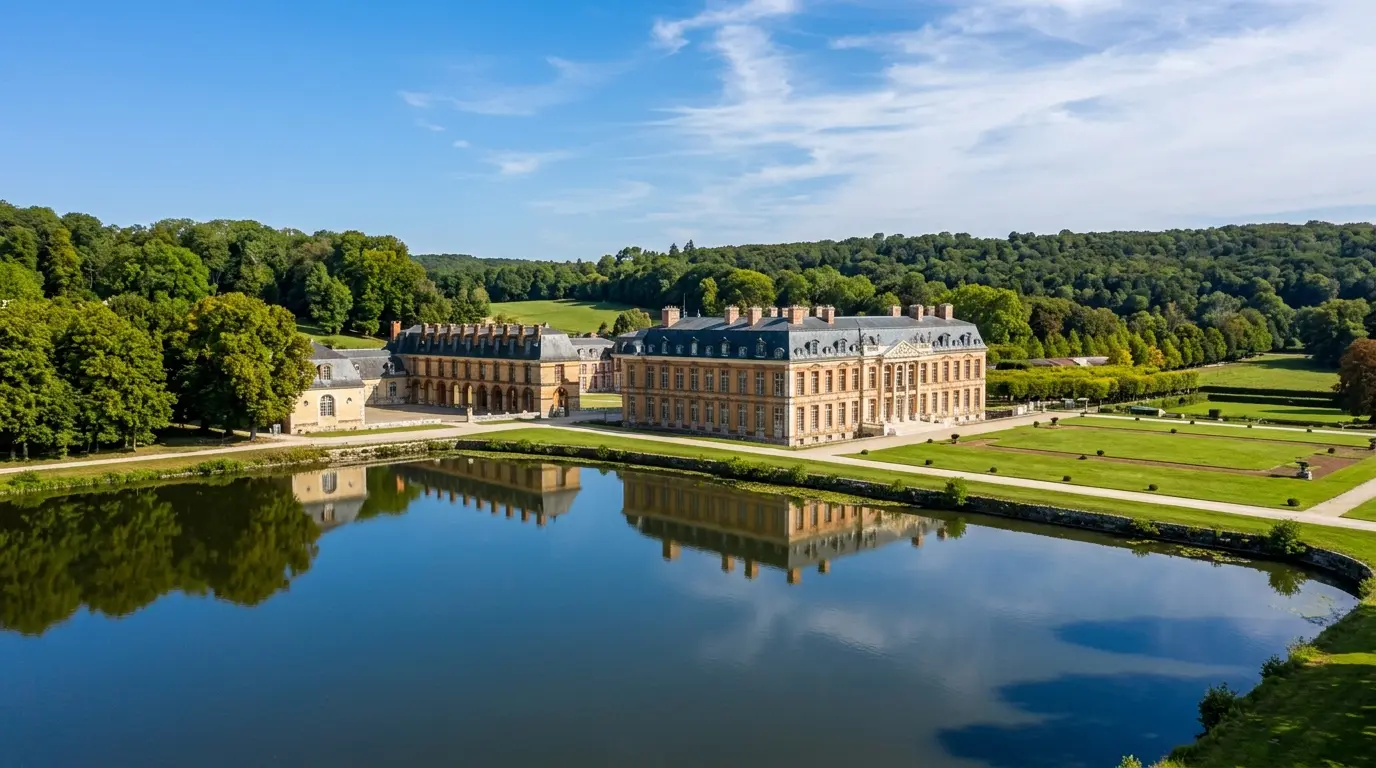
The honey-colored stone glows differently throughout the day. Morning light gives it a soft warmth; afternoon sun emphasizes the precision of each carved detail; golden hour transforms it into something almost ethereal. The central corps de logis, flanked by two perfectly balanced wings, creates a composition so pleasing to the eye that you understand why this style became the template for elegant architecture worldwide.
The moat surrounding the château adds a romantic dimension. Unlike defensive medieval moats, this water feature serves purely aesthetic purposes—reflecting the façade, creating mirror images of the sky, and providing that quintessentially French marriage of practicality and beauty. In spring, when trees leaf out around the water’s edge, the reflections become painterly.
Inside: Private Grandeur
Dampierre has remained in private hands for most of its history, only recently opening more fully to the public. This private stewardship means the interiors feel lived-in rather than museumified. The Grand Salon showcases period furniture, tapestries, and art that tell the story of aristocratic taste across centuries.
The Library deserves special attention—shelves of leather-bound volumes create walls of knowledge, while tall windows flood the space with natural light. It’s a room that makes you want to sink into an armchair with a book and lose track of time.
Throughout the château, you’ll find family portraits, hunting trophies, and personal touches that remind you this isn’t just a monument—it’s been a home for over three centuries. The current owners’ careful restoration work has preserved the building’s soul while making it accessible to visitors.
The Park: Designed Beauty Meeting Wild Nature
If the château represents human perfection, the park at Dampierre shows what happens when formal design embraces natural landscape. André Le Nôtre himself, fresh from his triumph at Versailles, designed the original gardens. While much has evolved since the 17th century, his vision of ordered nature still shapes the experience.
The formal gardens closest to the château maintain geometric precision—parterres, clipped hedges, and carefully placed statuary create outdoor rooms that extend the architecture into nature. These gardens are never overwhelming in scale; they invite contemplation rather than demand awe.
Beyond the formal zone, the park opens into the English-style landscape garden, added in the 18th century when romantic naturalism became fashionable. Winding paths lead through groves of ancient trees, past hidden ponds, and to unexpected viewpoints. The transition from formal to natural feels organic, showing how French landscape design evolved.
The Grand Canal, inspired by (but more intimate than) Versailles, provides a focal point for the park. Walking its length offers constantly changing perspectives on the château—each angle revealing new aspects of Mansart’s genius.
A Château That Works for Its Living
What makes Dampierre particularly interesting is how it balances heritage preservation with contemporary use. The château hosts weddings, corporate events, and cultural programs. French and international film productions regularly use it as a location—its authentic period interiors and photogenic exterior appearing in everything from historical dramas to fashion shoots.
This living use means Dampierre isn’t frozen at one historical moment. It’s a working château that happens to be three centuries old, demonstrating that heritage can be preserved through use rather than isolation.
Why Dampierre Deserves Your Time
For architecture lovers: Dampierre is a masterclass in classical French design—study it to understand what made this style influential worldwide.
For garden enthusiasts: The combination of Le Nôtre formality and English romantic landscape offers the best of both worlds in a manageable, walkable scale.
For photographers: Every angle works. The symmetry, the moat reflections, the park vistas—it’s almost impossible to take a bad photo.
For those seeking peace: Even on weekends, Dampierre rarely feels crowded. You can enjoy the grounds in near-solitude, something increasingly rare in the Paris region.
For cinema fans: Walking through rooms you’ve seen in films creates an odd déjà vu—the château’s beauty made it a favorite location for period productions.
The Seasonal Dance
Each season rewrites Dampierre’s atmosphere. Spring brings the park to life with blossoms and the bright green of new leaves. Summer offers long evenings when the light on the stone creates perfect golden-hour conditions. Autumn transforms the landscape gardens into a tapestry of reds, golds, and oranges. Winter strips away decoration to reveal pure architectural bones—some argue this is when Dampierre is most beautiful.
Practical Wisdom
- Visit mid-week if possible: Weekends see more visitors, though never Versailles-level crowds
- Allow 2-3 hours: One hour for the château, the rest for wandering the gardens
- Check opening days carefully: The château has more limited hours than major monuments
- Bring a picnic: The park invites leisurely dining in beautiful surroundings
- Combine with Chevreuse: The medieval town and Château de la Madeleine are just minutes away
- Photography golden hours: The château faces west—afternoon and sunset light is magical
The Dampierre Experience
What visitors remember about Dampierre isn’t any single spectacular element—it’s the overall sense of harmony. The château doesn’t compete for superlatives. It isn’t the biggest, the most famous, or the most opulent. But it might be the most perfectly proportioned, the most peacefully situated, and the most satisfyingly complete experience.
In an age of tourist attractions designed for maximum throughput and Instagram moments, Dampierre offers something counter-cultural: space to appreciate beauty slowly, to understand why certain proportions please the eye, to simply be in a beautiful place without urgency.
Jules Hardouin-Mansart designed buildings for kings, but at Dampierre he created something more lasting—a place where architecture, landscape, and light combine so harmoniously that even casual visitors feel they’ve touched something transcendent.
Beyond the Château Walls
Dampierre sits in the heart of the Vallée de Chevreuse Natural Regional Park. After your château visit, the valley’s hiking trails, medieval villages, and forested hills extend the experience. This isn’t just a château visit—it’s an immersion in the French countryside that Parisians have treasured as their escape for centuries.
The combination of cultural sophistication and natural beauty defines the Vallée de Chevreuse experience. Dampierre embodies both: human creativity at its finest, set in a landscape that needed only light enhancement to become perfect.